
Animal Parent & Baby Matching Cards – Printable Dementia Activity
$7.00
Quantity
A duck and a duckling. A horse and a foal. A sheep and a lamb.
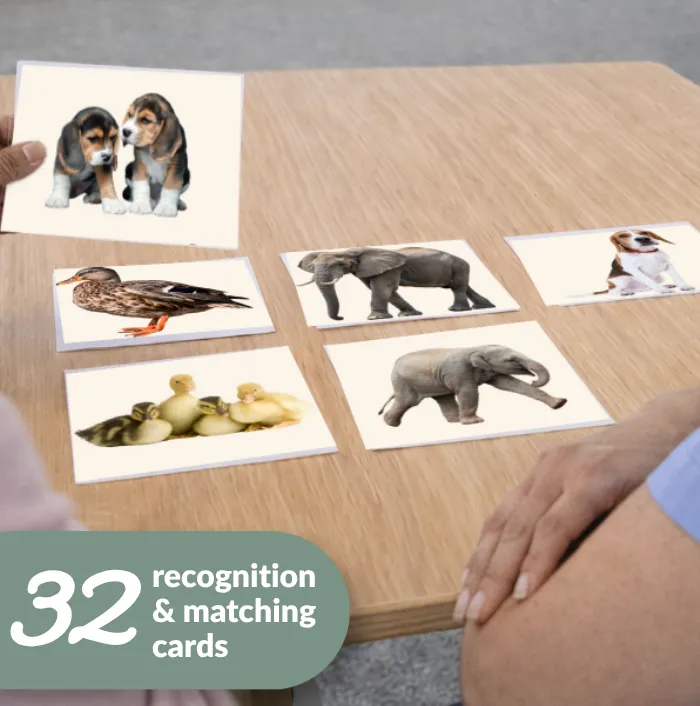
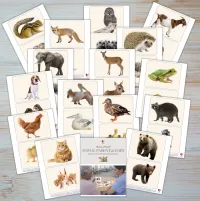
Animal Parent & Baby Matching Cards is a printable dementia activity featuring 16 animal parents and their babies.
The cards can be used in two different ways, depending on what works for the person you're supporting:
Match each parent animal with its baby or Print the cards twice and match identical pictures
You can use two pairs, five pairs or the whole set.
There's no prescribed level to reach and no need to finish them all.
The activity adapts to the person—not the person to the activity.
Who might enjoy Animal Parent & Baby Matching?
This activity may suit someone who:
enjoys animals
responds well to clear photographs or pictures
enjoys matching and sorting
likes hands-on activities
finds busy worksheets difficult
benefits from having something tangible to hold and work with
enjoys doing something together rather than simply being entertained
No knowledge about animals is required.
The person doesn't need to name them or tell you anything about them.
They can simply look, match and enjoy the pictures.
Two ways to use the cards
1. Match the parent with its baby
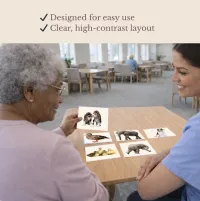
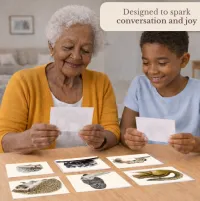
Place a small number of parent and baby cards on the table and invite the person to match the animals that belong together.
A parent-and-baby relationship isn't based on two identical pictures. The person is looking at two different animals and recognising how they relate.
Start with only a few obvious pairs if that works best.
You can always add more.
2. Match identical animal pictures
Print the set twice and you have another activity.
This time, the person matches the same animal to the same animal.
Identical picture matching may be more accessible for someone who finds matching a parent animal with its baby difficult.
And because the cards remain separate, you decide how many pairs to offer.
Start with less
You don't need to put all 32 cards on the table.
In fact, for many people, fewer cards will make the activity much more enjoyable.
Try two or three pairs.
Place a card in the person's hands if that helps them focus on it.
Demonstrate a match yourself rather than giving a long explanation.
If they're enjoying it, you can introduce more.
The number of pairs completed isn't the measure of a good activity.
What if they make a different match?
You don't need to correct them.
See what they do next. You might demonstrate another pair, reduce the number of cards or simply enjoy looking at the animals together.
The pictures themselves can also give you somewhere to begin a conversation.
You might comment on an animal you like or something you notice in a picture without turning it into a question the person has to answer.
And if a conversation develops, follow it.
Connecting is more important than completing the matches.
More than one activity in the same set
One of the useful things about this set is that you can change the activity without needing a completely different resource.
Someone may enjoy matching animal parents and babies today.
Another person may find identical matching easier.
Someone else may simply enjoy choosing between two animal pictures or looking through a few favourite cards with you.
You don't have to use the resource in one particular way for it to be worthwhile.
A Montessori-inspired approach to dementia activities
Animal Parent & Baby Matching Cards follows the same Montessori-inspired approach used throughout Sylvia's Heart activities: provide an appealing, hands-on activity, keep the task manageable, demonstrate rather than over-explain, and allow the person's response to guide what happens next.
The aim isn't to test what someone with dementia can still do.
It's to create an opportunity for them to participate using abilities they can still access.
What's included?
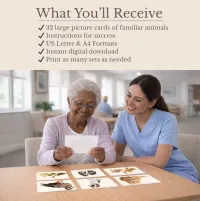
You'll receive:
16 parent-and-baby animal pairs
32 individual animal cards
cards that can also be printed twice for identical picture matching
caregiver instructions
US Letter PDF
A4 PDF
instant digital download
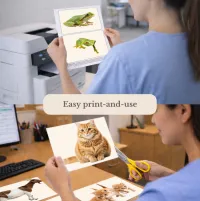
Print and cut the cards, then laminate or reinforce them if desired for repeated use.
Use at home or in dementia care
Animal Parent & Baby Matching Cards can be used:
one-to-one
during family visits
at home
in aged care and memory care
in small groups
by activity staff and professional caregivers
Use the parent-and-baby relationships.
Use identical matching.
Use fewer cards.
Or forget about matching altogether if the person becomes interested in looking at and talking about the animals.
Follow the person. The cards simply give you somewhere to begin.
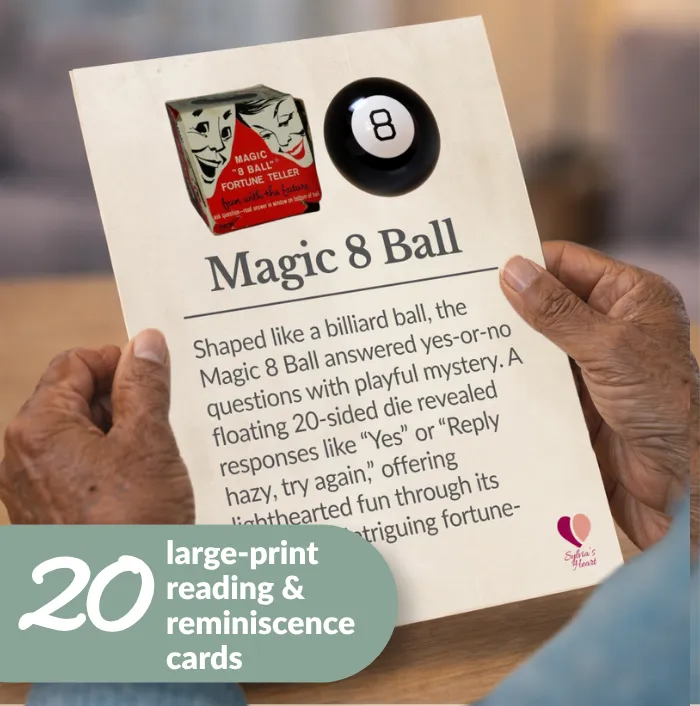
You may also like
Customer Reviews

Write a review
Be the first one to review this product

© 2026 | Powered by Freedomkit.ai