
Finish the Phrase – Printable Dementia Reading Activity
$9.00
Quantity
Sometimes you only need to start the sentence.
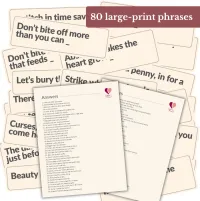
Finish the Phrase is a printable reading and word activity for people living with dementia, built around familiar sayings and expressions.
The beginning of a well-known phrase is provided, and the person is invited to complete it.
These aren't obscure quiz questions or facts someone has to study. They're expressions many people have heard and said over and over again throughout their lives.
Sometimes the ending comes immediately. Sometimes it doesn't.
Either way, this isn't a test.
It's an opportunity to read, respond, talk—and perhaps have some fun with the words.
Who might enjoy Finish the Phrase?
This activity may suit someone who:
enjoys familiar sayings and expressions
can still read short pieces of text
likes word activities
enjoys joining in verbally
responds to familiar language and rhythm
enjoys humour and conversation
prefers short activities to longer reading tasks
It can be used one-to-one or with a small group.
And there's no requirement to work through every phrase.
A handful may be plenty.
How does Finish the Phrase work?
Present the beginning of a familiar saying and give the person time to read it.
They may immediately supply the ending.
If they do, wonderful. If they don't, there's no need to keep prompting them to search for it.
You can provide the ending yourself and enjoy the whole expression together.
Don't turn it into a memory test
The purpose isn't to find out how many sayings the person can remember.
Avoid creating pressure with:
“Come on, you know this one.”
or:
“You used to say this all the time.”
Instead, give them time to respond.
If the ending comes, let it come.
If it doesn't, help.
Success isn't measured by the number of correct answers.
Why can familiar phrases be enjoyable?
Some expressions become extraordinarily familiar because we've encountered them repeatedly over many years.
They have a rhythm and predictability of their own.
That's part of what makes finishing a familiar phrase different from being asked an open-ended question such as:
“What sayings do you know?”
Here, the beginning is already provided.
The person isn't being asked to generate something from nothing. They have words in front of them that give them somewhere to start.
Why cards instead of a Finish the Phrase worksheet?
You'll find many Finish the Phrase activities presented as worksheets, with a whole page of incomplete sayings to work through.
This one is deliberately different.
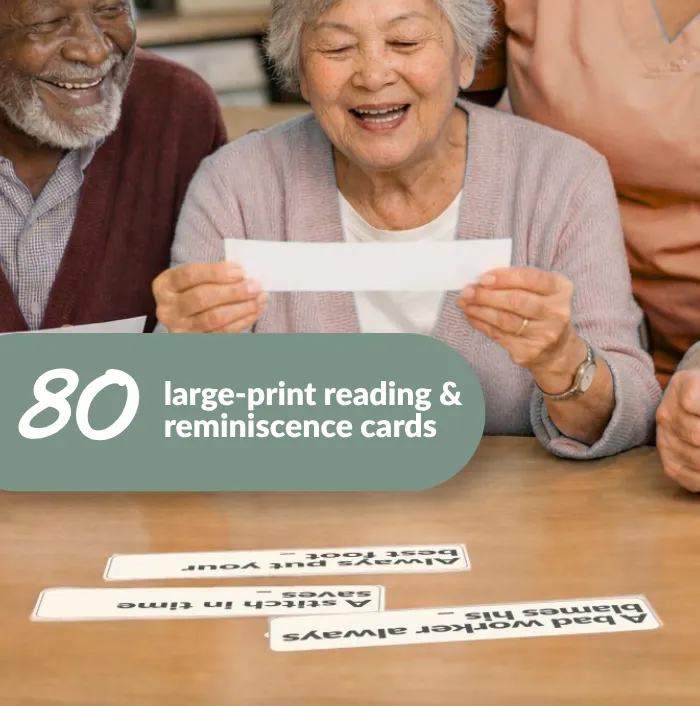
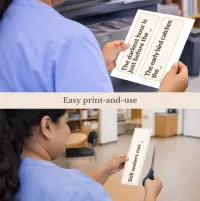
Each phrase is presented on an individual card, so the person can hold and focus on one phrase at a time.
This approach was influenced by dementia educators Tom and Karen Brenner, who use large-print cards in their Montessori-inspired reading activities. They describe giving a person something concrete to hold as a way of helping them focus on the activity in front of them.
Individual cards also allow the caregiver to control how much is presented.
You might offer one card at a time, choose just a handful of phrases, or continue with more if the person is enjoying themselves.
There's no page full of questions competing for attention. Just one familiar phrase, in the person's hands, in this moment.
Adapt the activity to the person
The cards make it easy to change the activity according to the person's capacity on that particular day.
You can:
offer one phrase at a time
choose easier or more familiar phrases
read the beginning aloud if reading is difficult
give the ending if it doesn't come
take turns completing phrases
stop after two or three cards
continue if the person is enjoying it
The person doesn't have to adapt to a fixed worksheet.
You adapt the activity to the person.
Let the phrase take you somewhere else
A familiar expression may lead to another saying.
It might prompt laughter or disagreement.
Someone may tell you that their family always said it differently.
Or the phrase might lead to a completely unrelated conversation.
Follow it.
You don't need to bring the person back to the activity simply because there are more phrases waiting.
Connecting is more important than completing.
What if the person can't finish the phrases?
That's okay.
Read the complete phrase aloud.
Try another one.
Take turns.
Or let the person read while you provide the endings.
The activity can change according to what the person can comfortably do.
And if they give you a completely unexpected ending, don't be too quick to correct it. It might be funnier or more interesting than the original.
The activity should adapt to the person — not the person to the activity.
Use Finish the Phrase one-to-one or with a group
At home, you might work through a few phrases together during a visit or over a cup of tea.
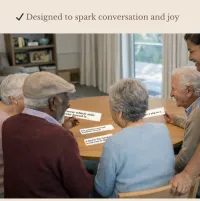
In aged care or memory care, the activity can also work with a small group.
One person might immediately know an ending. Someone else may join in after hearing another person respond. Another may simply enjoy listening.
Different kinds of participation are still participation.
What's included in Finish the Phrase?
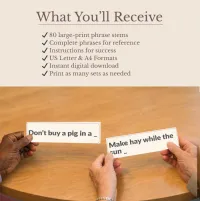
You'll receive:
a collection of familiar sayings and expressions to complete
clear, easy-to-read text
an uncluttered printable format
caregiver instructions explaining how to introduce and adapt the activity
US Letter PDF
A4 PDF
This is an instant digital download. Nothing will be mailed to you.
Simply print and begin.
What caregivers have said
“VERY GOOD GAME FOR MY DEMENTIA RESIDENTS.”
“A+!! Would recommend!!! A+!! Great.”
You may also like
Customer Reviews

Write a review
Be the first one to review this product

© 2026 | Powered by Freedomkit.ai