
Flowers Picture Cards & Photographs – Printable Dementia Activity
$7.00
Quantity
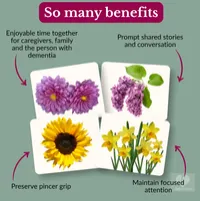
Flowers can be a lovely starting point for spending time together—familiar, colourful and beautiful to look at, without needing to remember names or facts.
Flowers Picture Cards & Photographs is a flexible printable dementia activity collection featuring 48 beautiful flower images:
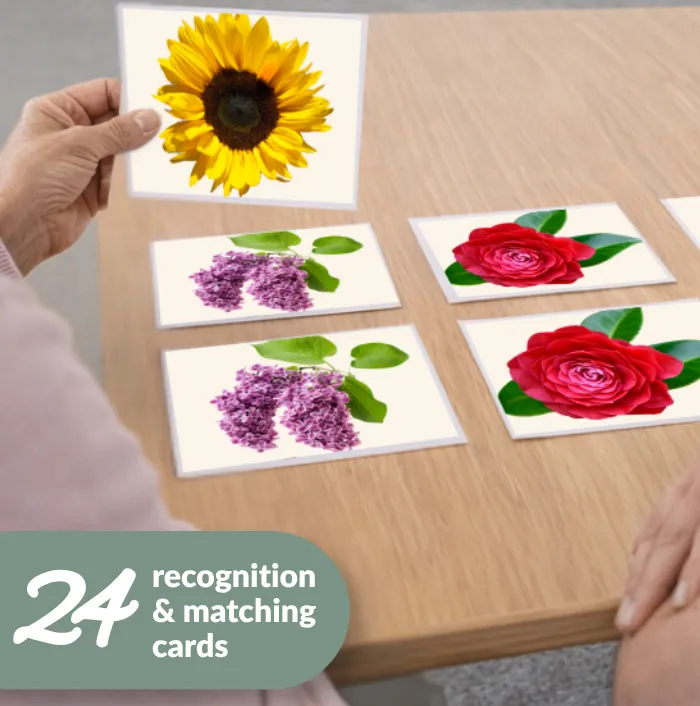
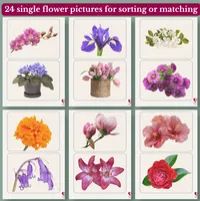
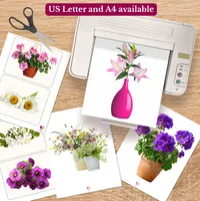
24 individual flower pictures that can be cut into cards for sorting, matching, choosing favourites and other activities.
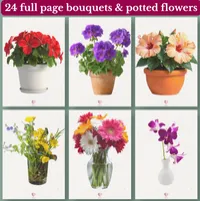
24 full-page photographs of bouquets and potted flowers that can be printed and enjoyed straight away, with no cutting or laminating required.
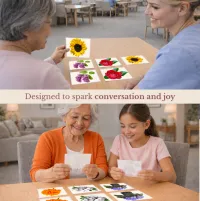
Some people may enjoy matching flowers or arranging cards into groups. Others may prefer looking at beautiful bouquets, choosing favourites or talking about gardening.
And sometimes, simply looking at the pictures together is enough.
The pictures give you somewhere to begin. Connecting is the real purpose.
Who might enjoy these flower pictures?
This collection may suit someone who:
has enjoyed flowers, gardening or arranging flowers
likes colourful, attractive photographs
enjoys looking through pictures or choosing favourites
likes sorting, matching or organising things
benefits from having something to hold or handle
finds worksheets or complicated games difficult
enjoys doing something alongside another person
You don't need to know whether the person can still name the flowers.
And they don't need to remember having seen a particular flower before.
They can simply respond to what's in front of them now.
Two picture formats, lots of possibilities
Full-page flower photographs
The collection includes 24 full-page photographs of beautiful bouquets and potted flowers.
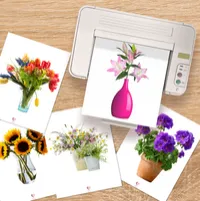
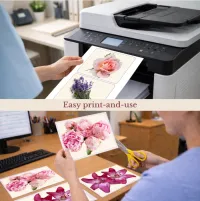
These are ready to enjoy with very little preparation. Simply print a few pages and look through them together.
You might:
admire the colours and arrangements
compare two bouquets and choose a favourite
talk about flowers the person likes
discuss where a beautiful arrangement might look in the home
enjoy the pictures without needing to talk at all
You can also place the pages in reusable clear sleeves or a display book to protect them.
There's no need to cut out cards or laminate anything.
Individual flower picture cards
The collection also includes 24 different flower pictures, with two images per page.
Cut them into individual cards if you'd like to use them for hands-on activities.
The cards can be used for choosing, sorting, grouping, arranging, matching or conversation.
You can offer just one or two pictures or introduce more, depending on the person's interests and abilities.
If you'd like to create identical matching pairs, simply print the card pages twice.
You don't have to prepare the whole collection. Choose the pictures and format that suit the person you're supporting.
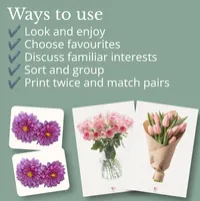
Six ways to enjoy the flower pictures (at least)
1. Look and enjoy
Offer a full-page photograph of a bouquet or potted flowers, or a few individual flower pictures.
Look at them together, admire the colours or simply enjoy the images.
There's no need to identify the flowers or answer questions about them.
2. Choose favourites
Offer two or three pictures and invite the person to choose one they like.
You might say:
“I love this yellow one. Which do you like?”
Or compare two bouquets and ask which they'd most enjoy having in their home.
There's no need for them to explain their choice.
3. Talk about familiar interests
Flowers may open up conversations about gardens, seasons, favourite colours or places the person has known.
Rather than asking them to remember something, you might offer an observation:
“These remind me of spring.”
“My grandmother used to grow roses.”
If a conversation develops, follow it. There's no need to return to the pictures or complete an activity.
4. Sort and group
Some people enjoy organising things.
Using the individual cards, you might invite the person to group flowers by colour, type, size or whatever similarities they notice.
You can demonstrate by placing two pictures together and inviting them to continue.
There doesn't have to be one correct way to group the flowers.
5. Match identical flowers
Print two copies of the individual flower pictures to create matching pairs.
Place a few cards face-up on the table and demonstrate how to find two identical pictures.
You might say:
“Can you help me find another one like this?”
Start with just two or three pairs if that's more comfortable.
If the person enjoys matching, you can gradually introduce more.
If they make a different match, there's no need to correct them.
The aim isn't to get every pair right.
6. Handle and arrange
Some people enjoy picking up pictures, moving them around, placing them in rows or arranging them on the table.
Others may prefer to look while you handle the cards.
Let the person take the lead where possible.
Handling and arranging the pictures can be enjoyable without having a particular task to complete.
Don't turn it into a memory test
Try to avoid questions such as:
“Do you remember what this flower is called?”
or
“You used to grow these—don't you remember?”
Instead, talk about what you're both looking at.
“That's a beautiful colour.”
“I like this one.”
“Which of these do you like?”
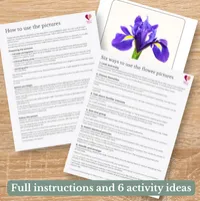
Your included facilitator guide explains how to introduce the pictures gently, avoid factual memory-testing questions, allow plenty of time and follow the person's interests.
It also explains why there's no need to correct an unexpected match or insist on finishing an activity.
Start small and follow the person
You don't need to present all the pictures at once.
For someone who is easily distracted or overwhelmed, one full-page photograph or two individual cards might be plenty.
If the person is interested, offer more.
If they seem tired, frustrated or uninterested, try something different or stop.
They might want to look at one particular bouquet for a while.
They might start talking about a garden they once had.
They might arrange the cards in a way you hadn't expected.
Or they may simply enjoy sitting with you.
Follow their interest rather than trying to complete a task.
As the included instructions put it:
“Connecting is the game.”
What's included?
Your instant digital download includes:
24 individual flower images (two per page), ready to cut into cards if desired
24 full-page photographs of bouquets and potted flowers
the option to print the individual flower pictures twice to create 24 matching pairs
a dementia-friendly How to Use guide with different ways to enjoy the pictures
guidance for preparing and introducing the activity
US Letter PDF
A4 PDF
No laminator required.
Print the full-page photographs and enjoy them straight away, or prepare individual cards for more hands-on activities.
You can laminate the cards or mount them on cardboard for durability if you wish, but it's entirely optional.
Suitable for home and professional dementia care
Flowers Picture Cards & Photographs can be used:
at home with a family member
during family visits
in aged care and memory care settings
in one-to-one activities
with small groups
by family caregivers, professional caregivers and activity staff
The collection offers different ways to engage, from simply enjoying beautiful photographs together to sorting, matching and other hands-on activities.
You can adapt what you offer from one day to the next.
Some days the person may enjoy matching a table full of flowers.
Another day, they might prefer looking at a single beautiful bouquet.
Both can be worthwhile.
The activity should adapt to the person—not the person to the activity.
You may also like
Customer Reviews

Write a review
Be the first one to review this product

© 2026 | Powered by Freedomkit.ai