
Classic Cars Picture Match - Printable Dementia Activity
$7.00
Quantity
For someone who has always loved cars, a familiar vehicle can still catch their interest even when other activities have become more difficult.
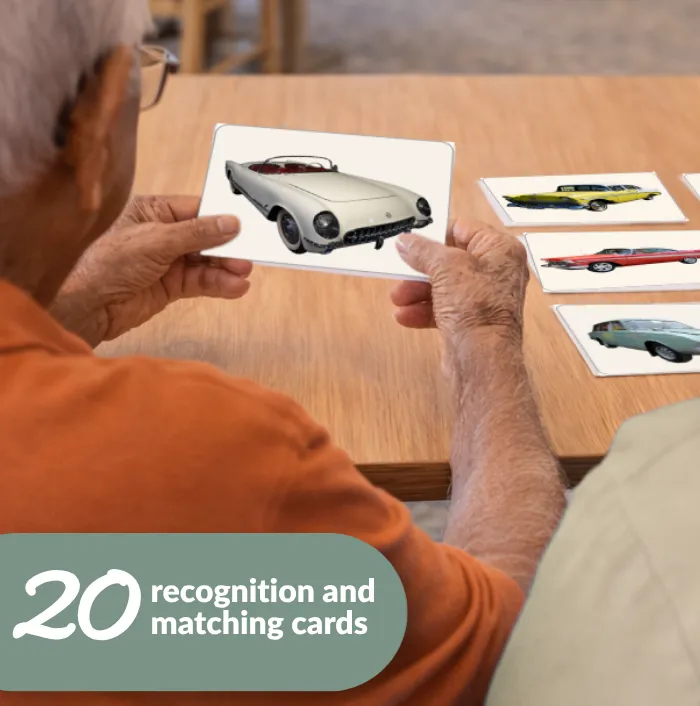
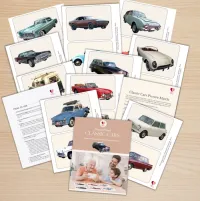
Classic Cars Picture Match is a printable dementia activity featuring 20 popular American and British cars from the 1950s and 1960s. The collection includes cars from both sides of the Atlantic, offering familiar motoring images that may appeal to people with different backgrounds and experiences.
The cards can be used for simple picture matching, looking at the cars together, or as a starting point for conversation.
The person doesn't need to remember the make, model or year of a car to take part. This isn't a test of memory or car knowledge.
It's an opportunity to spend time with something that may already be familiar and interesting to them.
Who might enjoy this classic car activity?
This activity may suit someone who has enjoyed:
British or American classic cars
cars and motoring
driving
working with or around vehicles
following different makes and models
motor shows or classic cars
simply looking at cars
If you're looking for activities for a man with dementia, his own interests are a good place to start. Cars may be a wonderful choice for one person and completely uninteresting to another.
And, of course, an interest in cars isn't limited to men. The person's interests matter more than their gender.
How does the picture matching activity work?
Print two sets of the car cards and invite the person to match identical pictures.
You don't need to use all 20 pairs at once. You can use a smaller number.The activity can be adapted to the person's abilities on the day.
Start with just a few cars
You might begin with only two or three pairs of cards on a clear table. Place one or two cards in the person's hands.
Demonstrate a match yourself and then invite the person to have a turn. You could say:
“Can you help me find the one that matches?”
Give them plenty of time to look and respond.
If they enjoy it and want to continue, you can gradually introduce more cards.
There's no need to test their memory
Try to avoid turning the activity into a quiz.
Rather than asking:
“Do you remember what car this is?”
you might simply put a card where the person can see it — or into their hands if appropriate — and say:
“Look at this one.”
Then give them some time.
They might recognise it. They might read something on the card, comment on the car, smile, pick it up for a closer look or begin talking about something it brings to mind.
Or they might not be interested at all.
You don't need a remembered story for the moment to have worked.
What if matching is too difficult?
Matching is only one way to use the cards.
If matching identical pictures is too difficult, try using fewer cards or demonstrating the match again.
Or forget about matching altogether.
You might simply look through the cars together. The person might choose one they like, comment on a colour or shape, pick up and examine the cards, or start a conversation.
If they make an incorrect match, there's no need to correct them.
And if the cars don't interest them, that's useful information too. Put the activity away and try something else.
The aim isn't to make an activity work. It's to find something that works for this person.
Why familiar interests can still matter
As dementia changes a person's abilities, something they once enjoyed may become too complicated or require more memory, concentration, planning or initiative than it once did.
That doesn't necessarily mean the interest itself has disappeared.
Someone who can no longer maintain a car, follow detailed motoring information or independently pursue an old hobby may still enjoy looking at familiar vehicles.
Picture matching offers a simple, hands-on way to participate without needing to learn a new skill or remember the “right” answer.
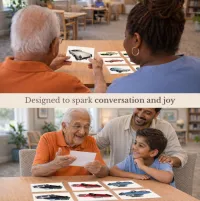
And because the activity is based around a familiar interest, the cards can also give family members, caregivers and activity staff something to share with the person, rather than relying entirely on questions or conversation.
What's included in this printable dementia activity?
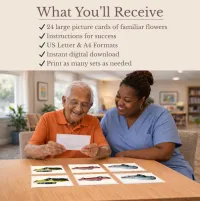
You'll receive:
20 different American and British classic car images from the 1950s and 1960s
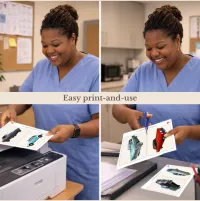
cards designed to be printed, cut and matched
caregiver instructions explaining how to prepare, introduce and adapt the activity
US Letter PDF
A4 PDF
This is an instant digital download. Nothing will be mailed to you.
Simply print the cards, cut them out and they're ready to use. You can also laminate them or print them onto heavier card if you'd like them to last longer or be easier to handle.
Using Classic Cars at home, in aged care or memory care
Classic Cars Picture Match can be used:
at home with a family member living with dementia
during visits when you're not quite sure what to do together
for one-to-one engagement in aged care or memory care
by activity coordinators and professional caregivers
as part of a collection of activities based on a person's individual interests
There is no need to complete all the matches or even use the activity in the way it was originally intended.
The activity should adapt to the person — not the person to the activity.
A match, a smile, a comment, a conversation or simply a few pleasant minutes looking at the cars together can be enough.
You may also like
Customer Reviews

Write a review
Be the first one to review this product

© 2026 | Powered by Freedomkit.ai