
Famous Singers and Their Songs – Printable Dementia Music Activity
$7.00
Quantity
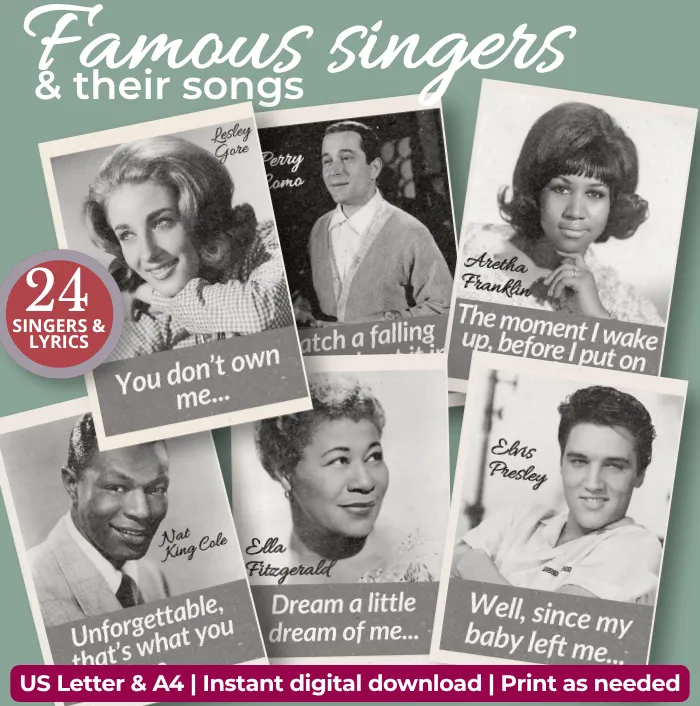
Famous Singers and Their Songs is a printable music activity for people living with dementia featuring 24 well-known singers and familiar songs from earlier decades.
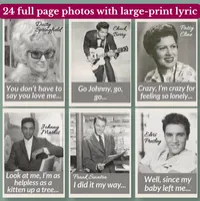
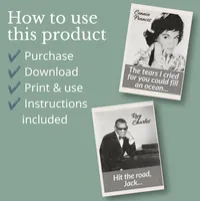
Each large card features a photograph of the singer, their name and a familiar line from one of their best-known songs.
The cards combine familiar music with pictures and large-print reading, giving the person several different ways to engage. They might recognise the singer, read the words, begin singing, comment on the photograph or simply enjoy looking at the card with you.
They don't need to remember the singer's name or identify the song to take part.
Who might enjoy this music activity?
Famous Singers and Their Songs may suit someone who has enjoyed:
popular music from the 1940s and 1950s
singing
dancing or listening to music
radio, records or live music
well-known singers from earlier decades
reading aloud
looking at photographs of familiar performers
It can be used with one person or as part of a small-group activity.
And there's no need for someone to be a music expert. Recognition, reading, listening and enjoyment can all be ways of participating.
How do you use the singer and song cards?
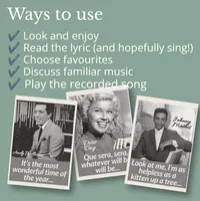
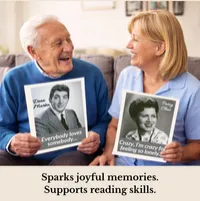
There are several ways to use the cards. Choose a card and place it where the person can see it clearly — or into their hands if that's comfortable for them.
Give them time to look at the photograph and words.
You might simply say:
“Look who we've got here.”
Or:
“Let's read this one.”
The person might read the words aloud. They may recognise the singer. They may start singing.
If they do, join in if they'd like you to.
You could also play the song and listen together.
Let the song emerge rather than testing memory
There's no need to ask:
“Do you remember this singer?”
or:
“Do you remember what song these words come from?”
The card already provides something to respond to.
If the person recognises the lyric and song, wonderful. If they don't, you can still read the card, play the song, look at the photograph or move on to another singer.
The person doesn't have to retrieve a memory on demand for music to become something you can enjoy together.
Why give the person a card to hold?
This activity was inspired in part by the work of dementia educators Tom and Karen Brenner, whose Montessori-inspired reading activities include a game called Name That Tune.
Their approach uses large-print cards that people can physically hold and read, providing something concrete to focus on rather than asking them to produce an answer without a prompt. They found that familiar song activities could naturally lead to singing, conversation and connection. Pasted text.txtTXT
I've built on that idea by combining a large photograph of the singer, their name and familiar words from a song on one card, creating visual and written prompts that can be explored together.
What if the person doesn't recognise the singer or song?
That's completely fine.
This isn't music trivia and there are no points for getting the answer right.
Try another card. Read the words aloud yourself. Put on the song. Look at the photograph together.
Or ask which singer they like the look of and follow wherever the interaction goes.
Someone might sing without being able to tell you the title of the song. They might recognise a face but not produce a name. They might tap along with the music or simply listen.
The activity doesn't need to produce a remembered fact to produce an enjoyable moment.
Use the cards for singing, listening and connection
There are many ways to use the same set of cards.
You might:
look through several singers and choose one together
read a card aloud
sing if a song comes to mind
find and play the song
use a card as a starting point for conversation
use several cards with a small group
simply look through the photographs together
If someone begins telling a story or talking about something completely different, there's no need to bring them back to the activity.
Follow the person, not the plan.
What's included in this printable dementia music activity?
You'll receive:
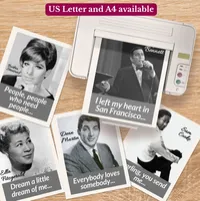
24 printable singer and song cards, featuring performers including Frank Sinatra, Elvis Presley, Ella Fitzgerald, Doris Day, Nat King Cole, Patsy Cline, Ray Charles, Aretha Franklin and others.
a large photograph of a well-known singer on each card
the singer's name
a familiar line from one of their songs
large, easy-to-read text
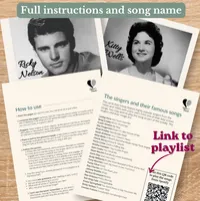
a song list so you can prepare a playlist
caregiver instructions explaining how to introduce and adapt the activity
US Letter PDF
A4 PDF
This is an instant digital download. Nothing will be mailed to you.
You can print the cards onto heavier paper or laminate them if you'd like them to be more durable and easier to handle.
Using Famous Singers and Their Songs at home or in dementia care
This printable music activity can be used:
at home with a family member living with dementia
during family visits
for one-to-one engagement
with small groups
in aged care or memory care
by activity coordinators and professional caregivers
for intergenerational visits and shared singing
You don't need to work through all 24 cards. Choose a few singers that seem likely to interest the person and see what happens.
A recognised face, a few words read aloud, tapping along to a song, singing together or simply enjoying the music can all be worthwhile ways to use the activity.
The activity should adapt to the person — not the person to the activity.
You may also like
Customer Reviews

Write a review
Be the first one to review this product

© 2026 | Powered by Freedomkit.ai