
Kitchen Word & Picture Match – Printable Dementia Activity
$7.00
Quantity
A familiar kitchen object. A large-print word. Can they find where the picture belongs?
Kitchen Word & Picture Match is a printable dementia activity combining pictures of familiar kitchen objects with large-print reading.
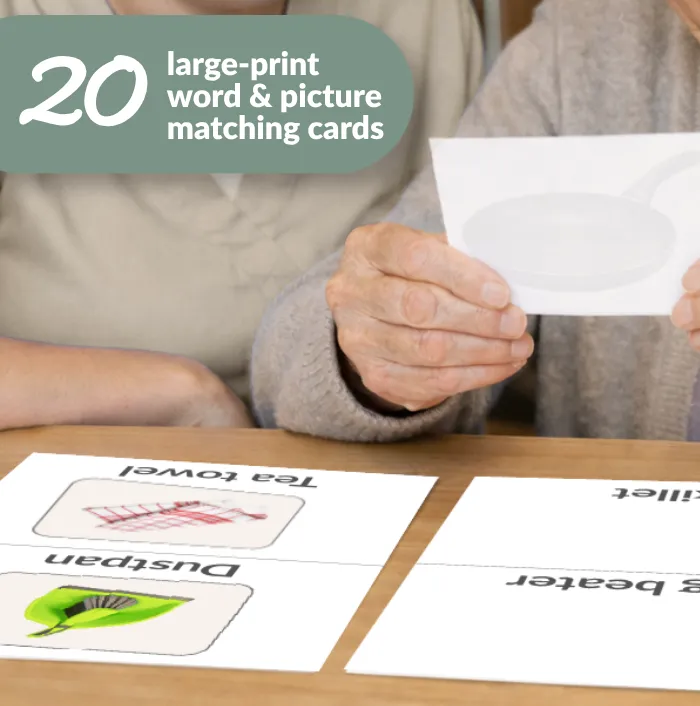
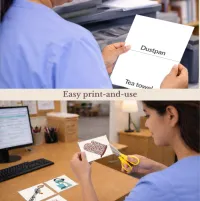
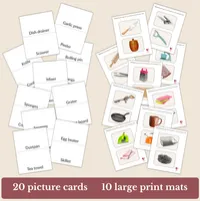
The set includes 20 picture cards and 10 large-print word mats featuring individual kitchen object names. The person looks at a picture, reads the words and matches the picture to the name of the object.
It provides something concrete to look at, read, hold and place—without asking the person to remember a particular event or answer questions about the past.
Who might enjoy this kitchen activity?
Kitchen Word & Picture Match may suit someone who:
has spent a lot of time cooking or baking
enjoys familiar household objects
can still read familiar words
likes sorting or matching
responds well to hands-on activities
enjoys looking at objects from everyday life
For someone who spent years preparing meals, baking, making cups of tea or simply being around a busy kitchen, these can be very familiar objects.
But the person doesn't need to have been the household cook to enjoy the activity.
How does the word and picture matching work?
Place one or more large-print object names on the table.
Then offer the person a kitchen picture card and invite them to find the word that matches the picture.
The activity brings together visual recognition and reading: they see the object, read the available words and decide which word names the object they're holding.
You might say:
“Can you help me work out where this one goes?”
Give them time to look at the picture, read the available words and make their choice.
Start with fewer choices
There's no reason to begin with all 10 word mats and 20 pictures.
Start with just a couple of words and their corresponding pictures.
You can demonstrate one yourself:
“I think this one belongs here.”
Then offer another picture.
If the person is comfortable with the activity, add more.
Reading is part of the activity
This isn't simply a picture sorting exercise.
The large-print words provide another source of information. The person can look at the object, read the word and work out which ones belong together.
That makes Kitchen Word & Picture Match particularly useful when you're looking for an activity that gives someone an opportunity to use reading skills they still enjoy.
Why use familiar kitchen objects?
A kitchen is full of things we've encountered repeatedly over a lifetime.
Some of the pictures in this set also show older or retro kitchen items, adding another layer of familiarity for people who may have used them over many years.
The person doesn't need to remember when they used an object, who owned one or what they cooked with it.
They can respond to what's in front of them now.
That distinction matters.
Rather than:
“Do you remember having one of these?”
you might simply say:
“Look at this one.”
or:
“Where shall we put this?”
Something to read, hold and move
This is another Sylvia's Heart activity influenced by the Montessori-inspired work of dementia educators Tom and Karen Brenner.
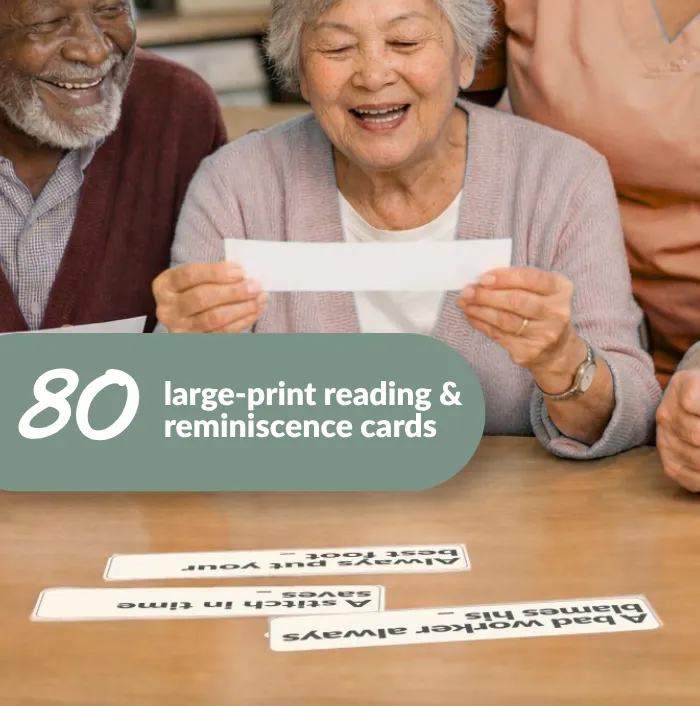
The Brenners use large-print cards and familiar categories to provide opportunities to practise remaining reading skills while also giving the person something concrete to hold and work with. Their activities are designed to support participation, socialisation and connection rather than relying entirely on someone producing answers from memory.
Kitchen Word & Picture Match builds on those ideas by combining large-print written categories with photographs of familiar kitchen objects.
What if word and picture matching is too difficult?
Reduce the number of choices.
Try one word mat with its pictures. Demonstrate a match. Read the word aloud if that's helpful.
Or change the activity altogether.
The person might prefer looking through the kitchen pictures, choosing objects that interest them or talking about something they notice.
If they make an unexpected match, don't rush to correct them. Give them time. There may be a connection that makes sense to them.
And if they're simply not interested, that's useful information too.
The aim isn't to make the activity work. It's to find something that works for this person.
Follow the person if conversation begins
A familiar kitchen object may prompt conversation about food, cooking, family, work or something completely unrelated.
If it does, you don't need to bring the person back to the matching exercise.
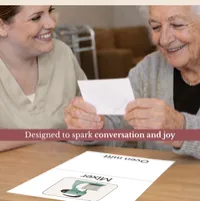
The activity has already given you something valuable: a way into interaction.
And if no conversation happens, that's fine.
Reading a few words and successfully placing a few pictures can be enough.
What's included in Kitchen Word & Picture Match?
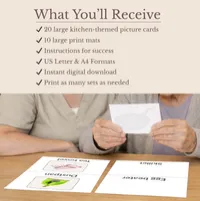
You'll receive:
20 kitchen object picture cards
10 large-print word mats
familiar kitchen objects, including some retro items
word-and-picture matching activities
caregiver instructions explaining how to introduce and adapt the activity
US Letter PDF
A4 PDF
This is an instant digital download. Nothing will be mailed to you.
You can print the activity onto heavier paper or laminate it for greater durability and easier handling.
Using Kitchen Word & Picture Match at home or in dementia care
The activity can be used:
at home with a family member living with dementia
during family visits
for one-to-one engagement
with a small group
in aged care or memory care
by activity coordinators and professional caregivers
Use as much or as little of the set as suits the person.
One word mat and a couple of pictures may be plenty. Someone else may enjoy working through a much larger selection.
The activity should adapt to the person — not the person to the activity.
You may also like
Customer Reviews

Write a review
Be the first one to review this product

© 2026 | Powered by Freedomkit.ai